LunaDrive
A Delay-Compensated High-Voltage GaN FET-Based Motor Driver
for Dynamic Robots with Flat BLDC Motors
IEEE/RSJ International Conference on Intelligent Robots and Systems (IROS) 2026
 arXiv (TODO)
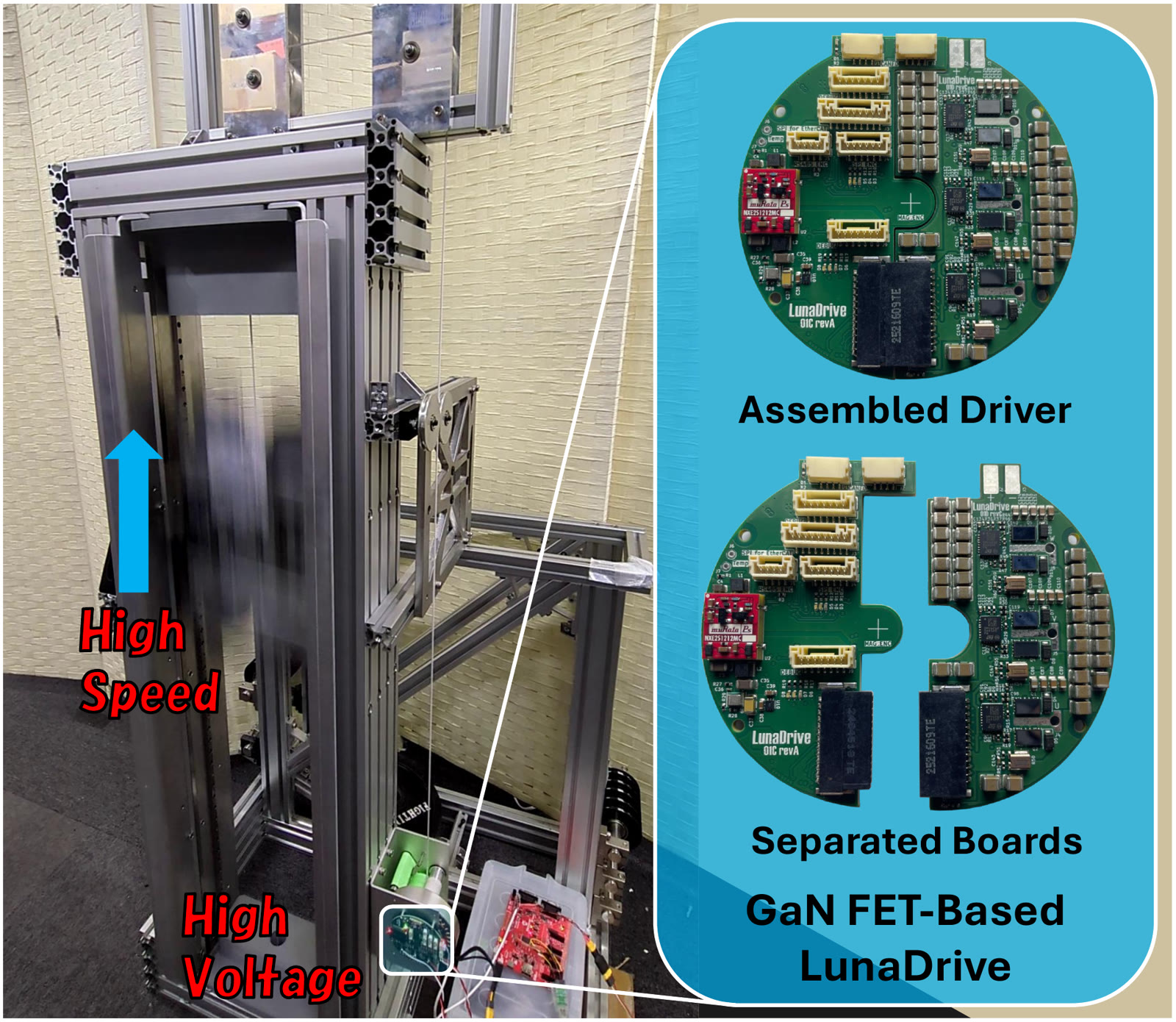
LunaDrive enabling high-voltage, high-speed operation for dynamic robots
Abstract
The performance improvement of high-power flat BLDC motors has accelerated the development of dynamic robots. However, many commercially available servo motors assume operating voltages of 48 V or lower, which limits the maximum rotational speed. Dynamic robots require rapid energy generation, so this voltage constraint restricts motion performance. Therefore, driving motors beyond the rated voltage is desirable to increase the instantaneous maximum speed. On the other hand, semiconductor devices used in motor drivers have a trade-off between voltage rating and current capability. Conventional drivers using Si MOSFETs have difficulty achieving both high-voltage and high-current operation. Although GaN FETs are promising, compact drivers that can be mounted on the rear side of flat BLDC motors remain limited. In this study, a motor driver for high-power flat BLDC motors using GaN FETs is developed. The effect of delay compensation in the high-speed region beyond the rated operating range is also investigated. In the experiments, under 96 V operation, a continuous current of 30 A was achieved with a heat sink attached. A peak current of 80 A and a maximum electrical frequency of 3110 Hz were confirmed. A high-speed load lifting experiment driven by a LiPo battery 24S (100 V) was also conducted, demonstrating applicability to dynamic robot operation.
Video
Motivation
Recent dynamic robots rely on high-power flat BLDC motors, but many commercial servo motors operate at 48 V or lower. Since motor speed is proportional to the applied voltage, this limits the maximum rotational speed and causes speed saturation during high-speed motion. Driving beyond the rated voltage is therefore required, yet the semiconductor devices used in motor drivers exhibit a trade-off between voltage rating and current capability. Replacing Si MOSFETs with GaN FETs resolves this trade-off, but existing GaN FET-based drives target experimental benches or industrial applications and are difficult to integrate into robots because of size and weight. LunaDrive is a compact GaN FET motor driver that mounts directly on the rear side of a high-power flat BLDC motor.
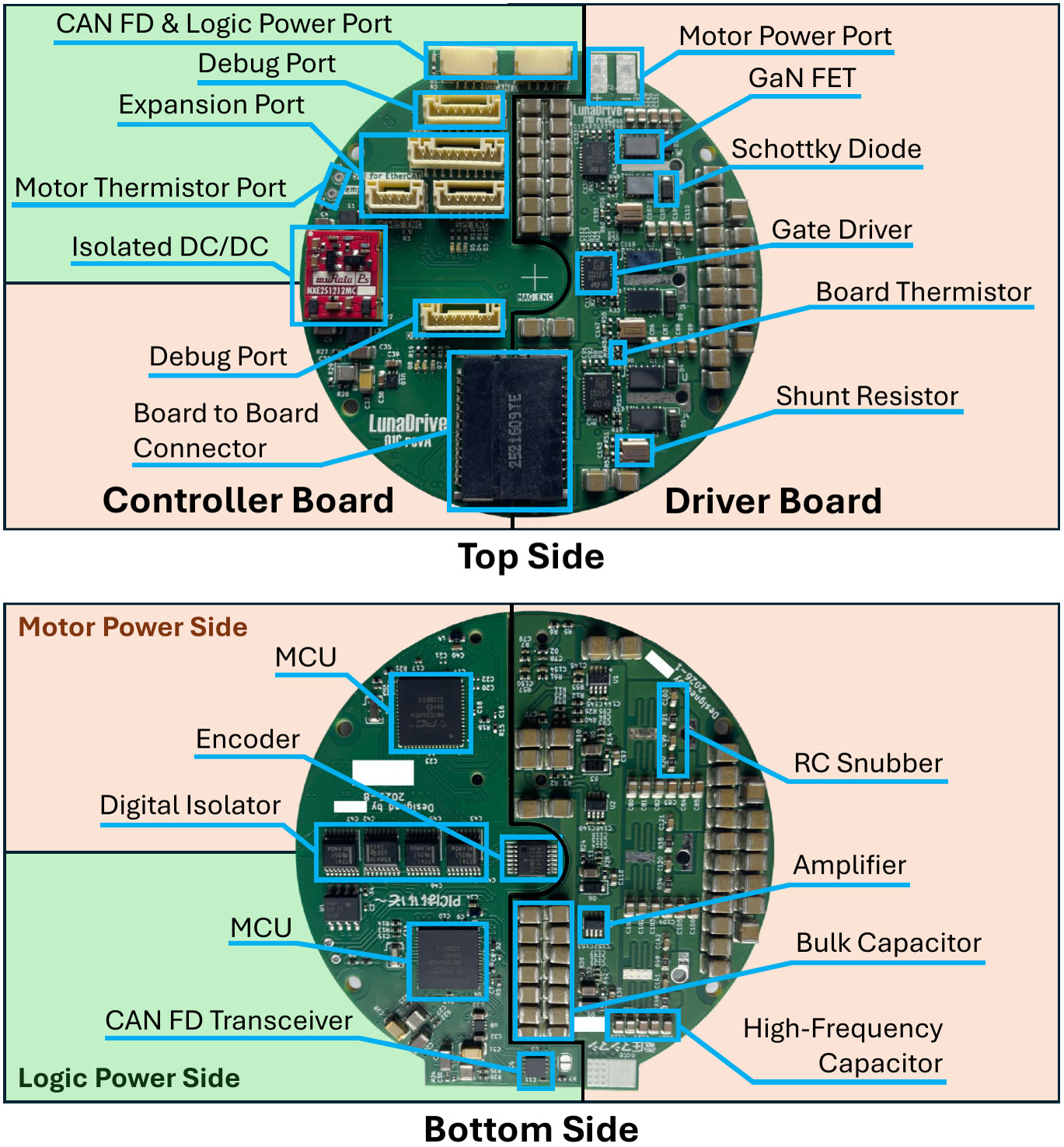
LunaDrive composed of two boards: a controller board and a driver board
Design of LunaDrive
LunaDrive consists of a controller board for motor control and host communication, and a driver board that drives the BLDC motor using GaN FETs. It is 70 mm in diameter and 8.51 mm thick, with only the connector section protruding outward. A logic supply (12 V) feeds the microcontrollers and gate drive circuits, and a motor supply (96 V, peak 150 V) drives the motor; the power stage components are rated for 150 V.
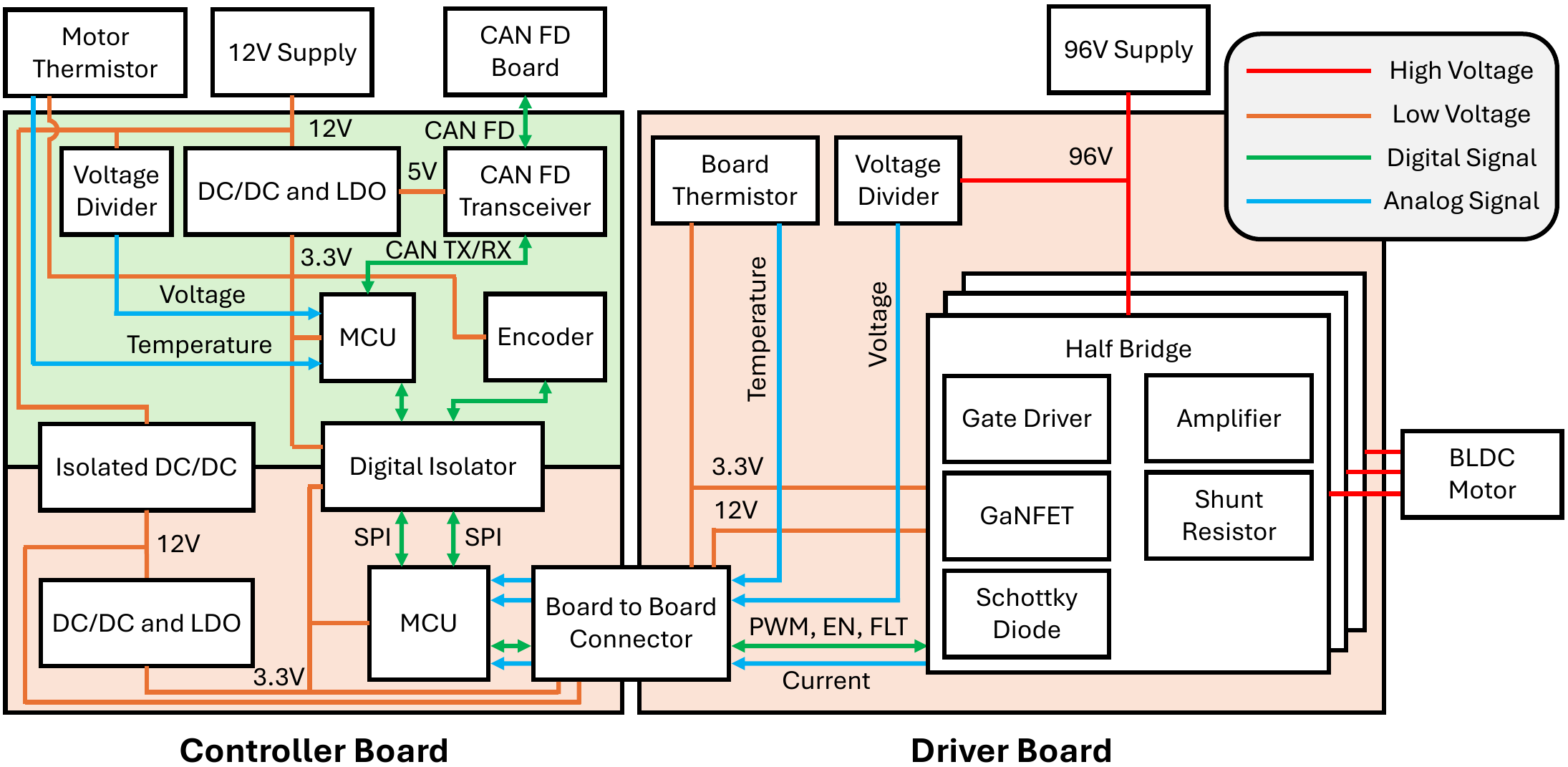
Electronic block diagram of LunaDrive
Controller board. The board is separated into logic and motor power domains by an isolated DC/DC converter and digital isolators, on a 6-layer 1 oz PCB chosen for implementation density and noise immunity. It carries the power circuits, a PIC32MK1024MCM064 (Microchip) microcontroller with integrated CAN FD and abundant PWM and ADC peripherals, a magnetic encoder, a CAN FD transceiver, and thermistors.
Driver board. The driver board carries three GaN FET-based half-bridge circuits on a 2 oz 8-layer PCB (16 oz total) to handle large currents. GaN FETs are smaller than Si MOSFETs of similar on-resistance and have lower on-resistance at a similar size, so the EPC2305 (EPC) was selected: 150 V breakdown, 3 mΩ on-resistance, 3 mm × 5 mm.
| Device | Type | On-Resistance [mΩ] | Size [mm2] |
|---|---|---|---|
| FET-1 | GaN FET | 3 | 15 |
| FET-2 | MOSFET | 2.5 | 116 |
| FET-3 | MOSFET | 5.6 | 30 |
Performance comparison of 150-V power FETs. FET-1: EPC2305 (EPC). FET-2: IPT025N15NM6ATMA1 (Infineon Technologies). FET-3: SIRS5700DP-T1-RE3 (Vishay Siliconix).
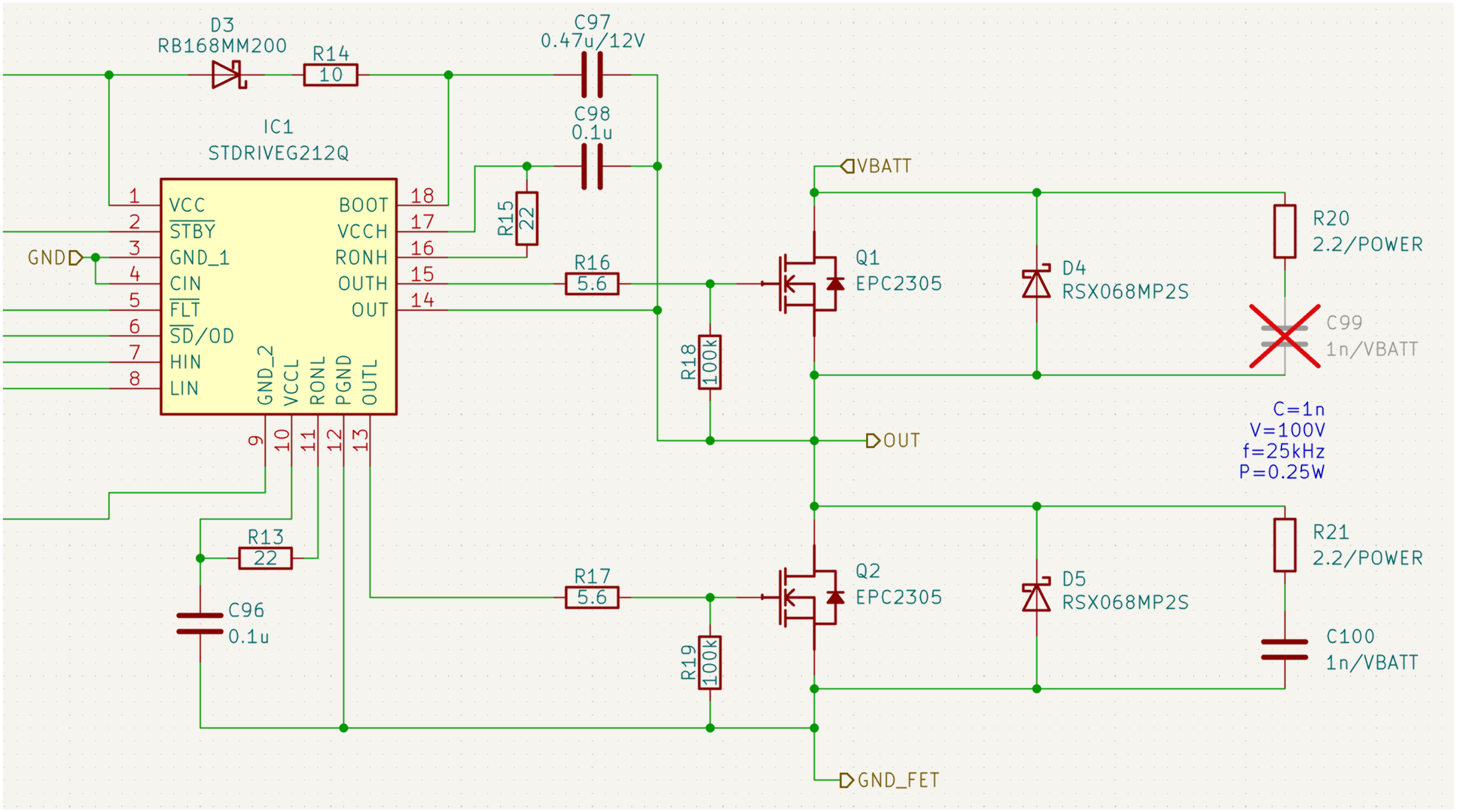
Schematic of GaN FET-based half-bridge circuit
Dead time. GaN FETs allow high-speed switching but have higher reverse voltage, which increases reverse conduction loss during dead time. Prioritizing stable operation under a motor load with large current fluctuations, a relatively long dead time of 100 ns was adopted, with a Schottky barrier diode in parallel to suppress the loss.
Gate drive. GaN FETs leave only a 1 V margin between the 6 V gate rating and the 5 V recommended gate voltage, making gate driving difficult. STDRIVEG212 (STMicroelectronics), which integrates LDOs for both low- and high-side circuits, was adopted, with the wiring to the GaN FET kept under 5 mm.
Capacitor selection. Series-connecting high-voltage MLCCs reduces the capacitance efficiency per unit area in proportion to 1/Ns2. Using the effective capacitance per unit area Carea = Cnom rDC / (A Ns2), where rDC is the retention ratio under DC bias and A the mounting area of a single device, two 100 V-rated capacitors in series outperformed one 250 V-rated capacitor under a 100 V supply. Given the 4 mm height restriction and the semicircular mounting area, GRM32EC72A106KE05 (Murata, 10 μF, 100 V, 3225M) was adopted, with 106 capacitors in total on the power line.
Control with Delay Compensation
Field-Oriented Control (FOC) with an amplitude-invariant Clarke and Park transformation is used. The Park transformation rotates by the electrical angle θe, so an error between the measured and actual angle degrades efficiency and torque. With an electrical angular velocity ωe and a system delay Td, the estimated angle becomes θe' = θe + Td ωe, giving a large deviation in the high-speed region.
The motors targeted here have p = 21 pole pairs, so the maximum electrical frequency reaches about 3000 Hz, against roughly 700 Hz recommended for commonly used BLDC drivers. The system delay comes from the encoder, the microcontroller, and the driver stage. Since the encoder delay is asynchronous with the microcontroller, AS5147U (ams OSRAM) with Dynamic Angle Error Compensation (DAEC) compensates it internally, while the remaining delay is compensated by calculation in the microcontroller. Current control uses PI control with a decoupling term, and Space Vector Modulation for a high modulation index.
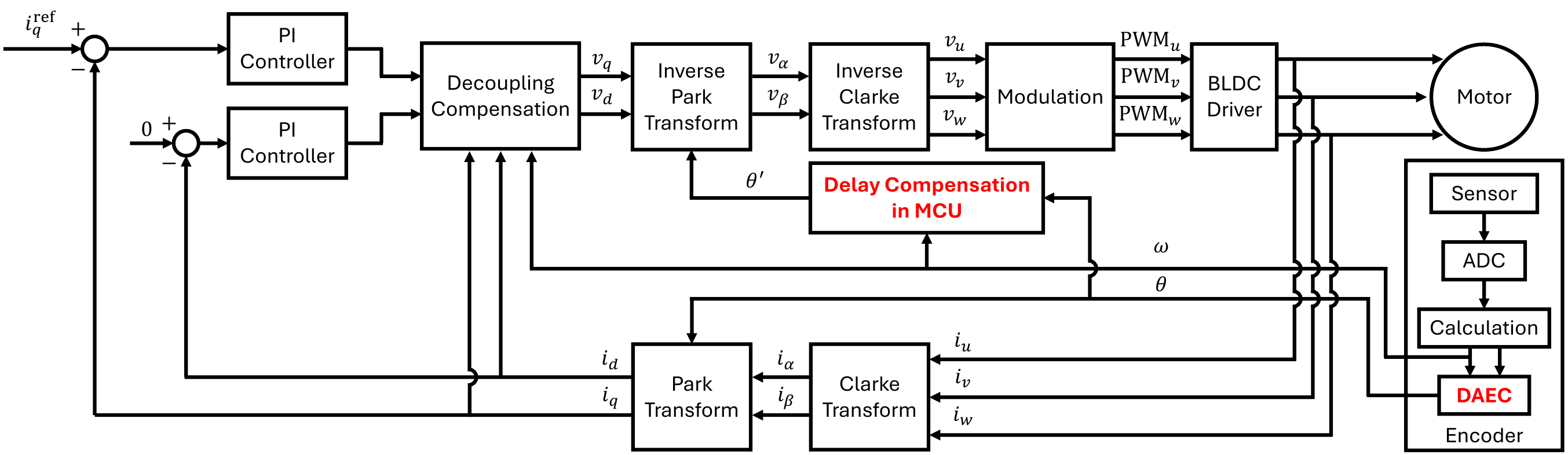
Control block diagram of LunaDrive with delay compensation
The PC and LunaDrive communicate at 1 kHz over USB-CAN FD, the internal microcontrollers at 2 kHz over SPI, and FOC runs at 25 kHz. A power supply unit provides 96 V, except in the load lifting experiment, where regenerative operation requires a LiPo battery supplying 100 V.

Overall system configuration
High-Power Wire Winding Module
A high-power wire module was built from LunaDrive and the frameless BLDC motor RO80 (CubeMars), consisting of a winding pulley and a pressure roller. With an 18 mm pulley and a 2 mm wire (Zylon core, polyester sheath), the winding radius is 10 mm and the wire tension is T = τ / r. The pressure roller keeps the wire from slackening when wound under no load.
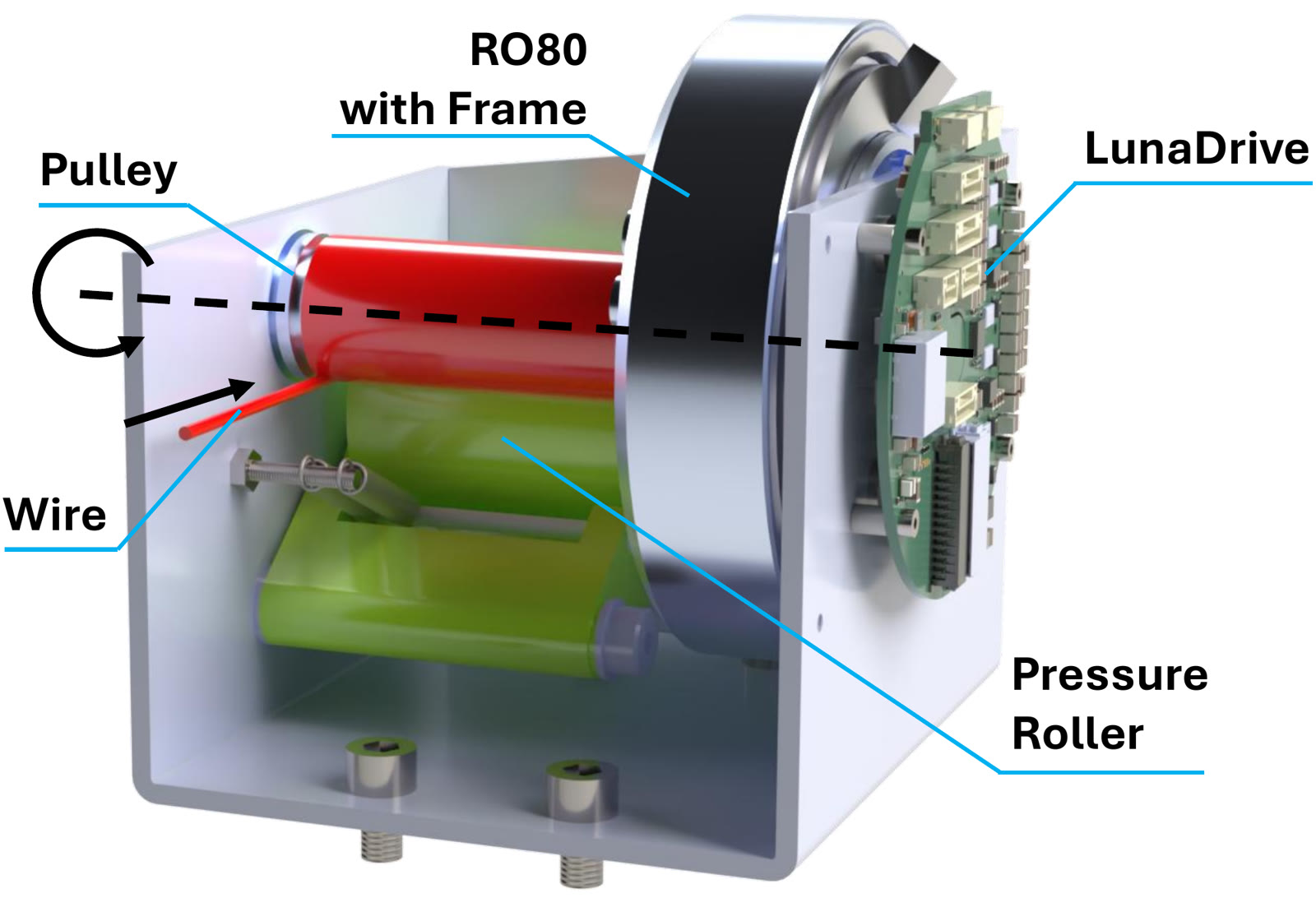
High-power wire module using LunaDrive
| RO80 Frameless BLDC Motor | Value |
|---|---|
| Rated Voltage | 48 V |
| No Load Speed | 5040 rpm |
| Rated Torque | 1.3 Nm |
| Peak Torque | 4 Nm |
| Pole Pairs | 21 |
RO80 frameless BLDC motor specifications
Two heat sinks were fabricated to reduce the thermal resistance of the GaN FETs. The Flat Heat Sink combines Thermal Interface Material (TIM), a 1 mm copper cover, and a machined copper component; the Finned Heat Sink adds 24 small commercial heat sinks on top. Their heights from the frame are 15 mm and 17.8 mm.
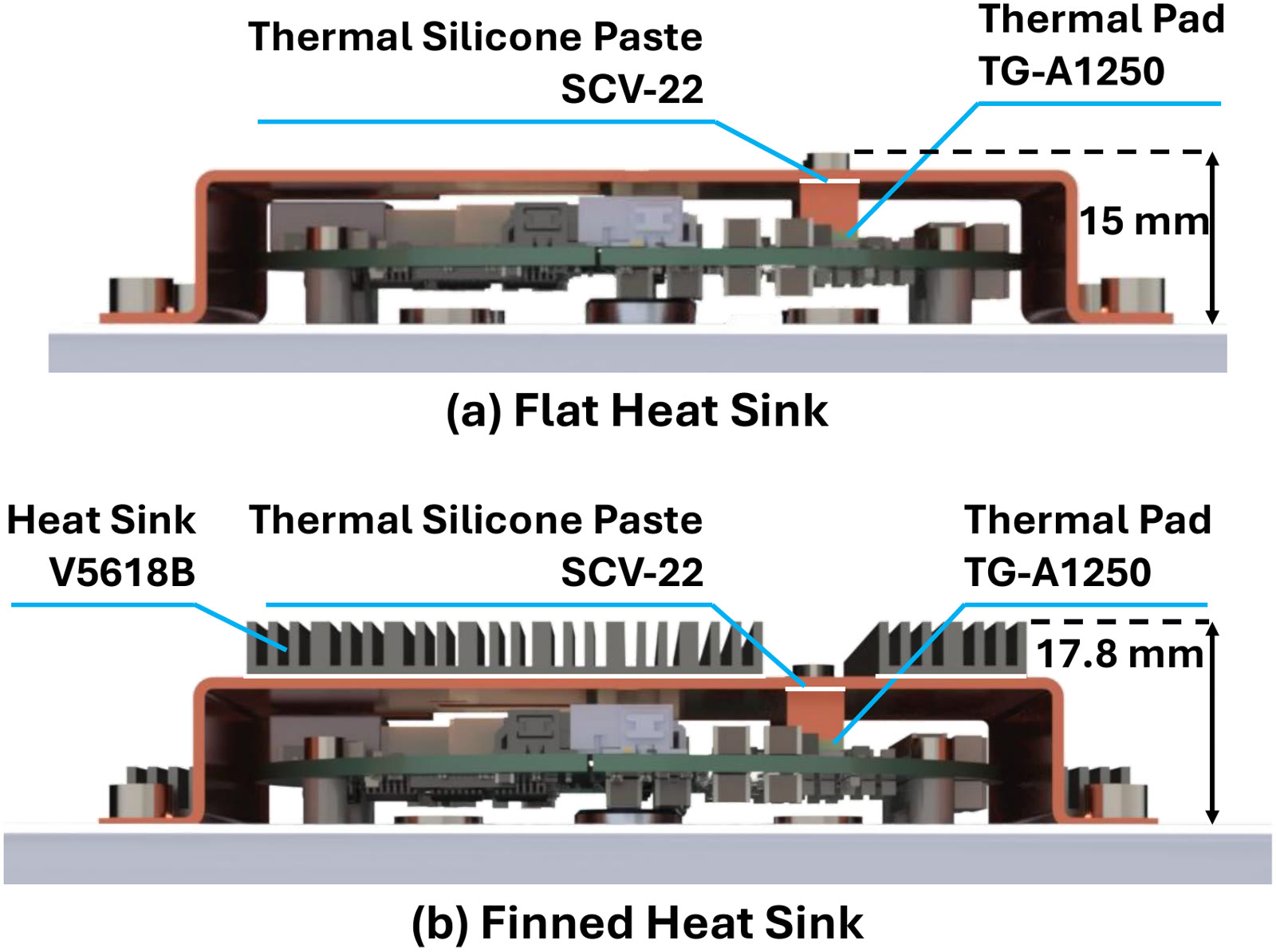
Two types of heat sinks
Switching Waveform Measurement
Switching waveforms were observed at 10 A motor current with an MDO4054B-3 (Tektronix, 500 MHz bandwidth). Since the motor is a load with large current fluctuations, the slew rate was set conservatively to 4.5 V/ns — lower than typical GaN FET operation, but still faster than Si MOSFETs. The ringing is sufficiently small.
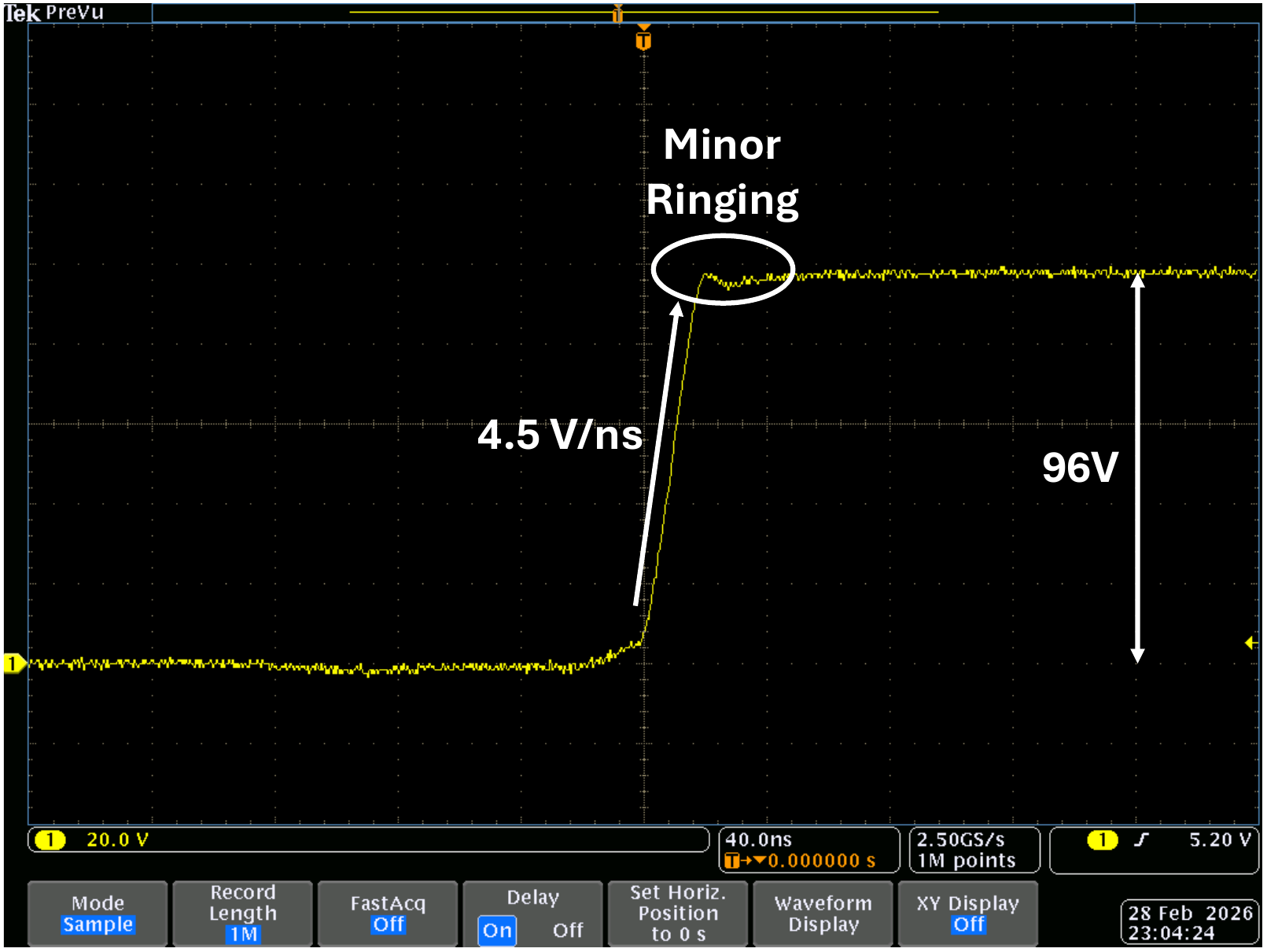
Switching waveform of drain-to-source voltage at 10 A motor current
High-Speed Operation with Delay Compensation
The speed improvement from 48 V to 96 V was measured with the delay compensation enabled and disabled, commanding 5 A to the motor under no-load conditions.
| Voltage [V] | Delay Compensation | Speed [rpm] | Electrical Frequency [Hz] |
|---|---|---|---|
| 48 | Disabled | 4340 | 1520 |
| 48 | Enabled | 4340 | 1520 |
| 96 | Disabled | 5760 | 2020 |
| 96 | Enabled | 8890 | 3110 |
Results of the high-speed operation experiment
Raising the supply from 48 V to 96 V increased the speed from 4340 rpm to 8890 rpm. At 48 V the compensation made no difference, while at 96 V it raised the speed from 5760 rpm to 8890 rpm. Without compensation, control delay causes d–q axis interference, the control destabilizes, and overcurrent detection stops the system. With compensation, operation is stable at an electrical frequency of 3110 Hz; near the maximum speed the current no longer follows the command because of speed saturation.
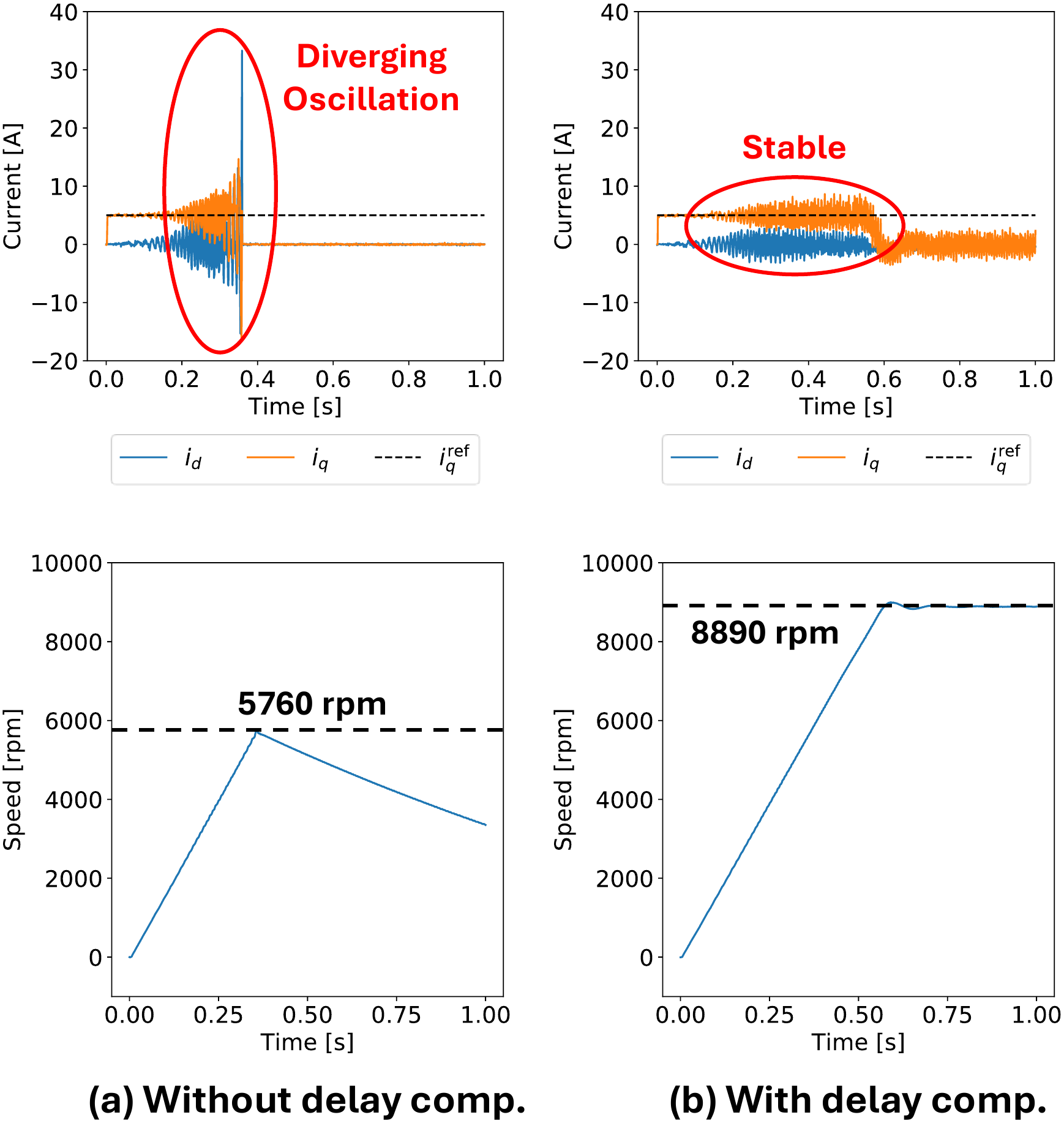
Current and speed responses at 96 V with and without delay compensation
Current Capability for the Target Motor
LunaDrive was verified to have sufficient peak and continuous current capability for the RO80 in the wire module. Since the definition of current differs between specifications, tension was measured directly with a ZTS-500N (IMADA). Applying up to 60 A for 2 s produced more than 400 N, the tension calculated from the specified peak torque.
For the continuous current, 20 A was applied with the Flat Heat Sink attached. FOC was run with the electrical angle fixed at θe = 0 so that the maximum current flows continuously through the U phase, whose FET sits within 2 mm of the temperature sensor — a conservative condition for the board. The motor reached the 80 °C limit first, with the board 6.5 °C cooler.
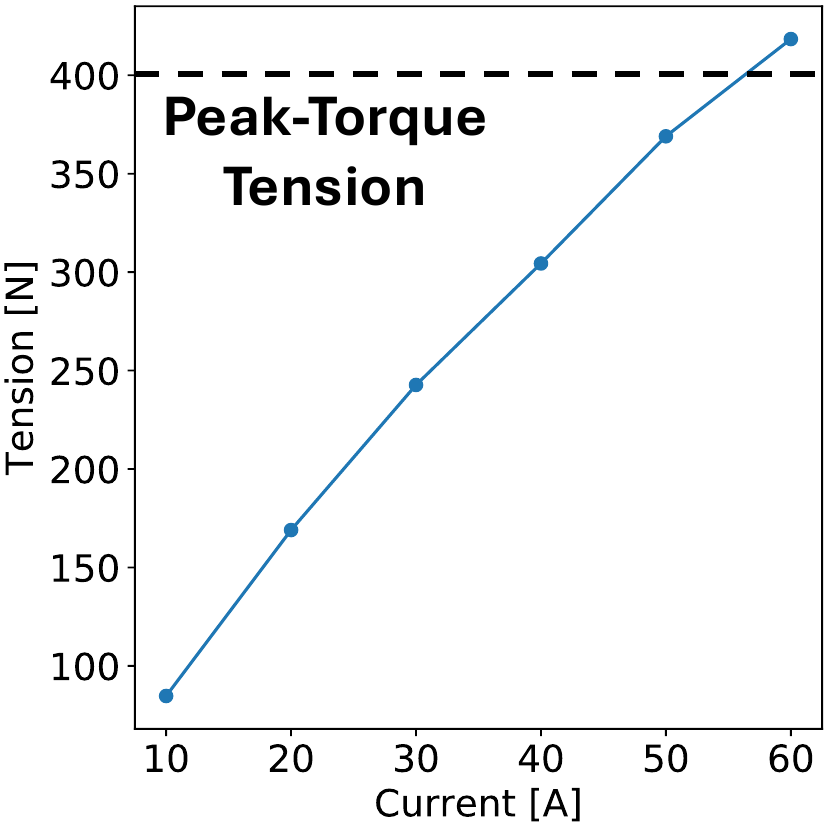
Current–tension relationship
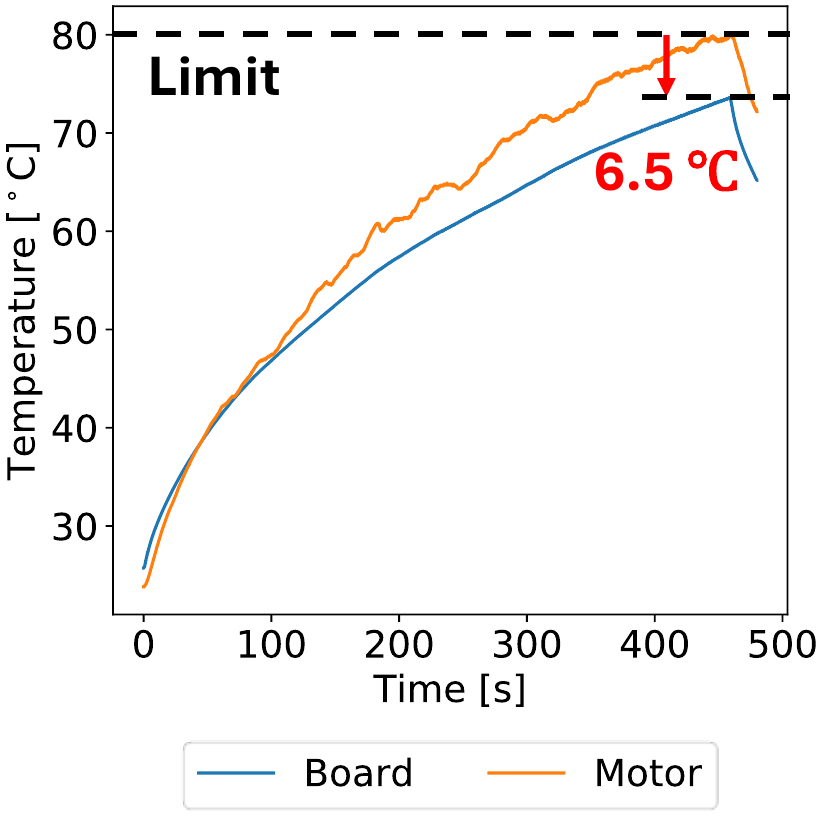
Board and motor temperatures at 20 A
Peak and Continuous Current Characterization
Since the RO80 allows less current than LunaDrive, a U13II KV130 (T-Motor) drone motor was used as the load, again with the electrical angle fixed at θe = 0. Without a heat sink, 80 A was applied for 0.5 s. The board temperature showed a large thermal response delay, suggesting the GaN FET temperature may not be measured accurately at large currents.
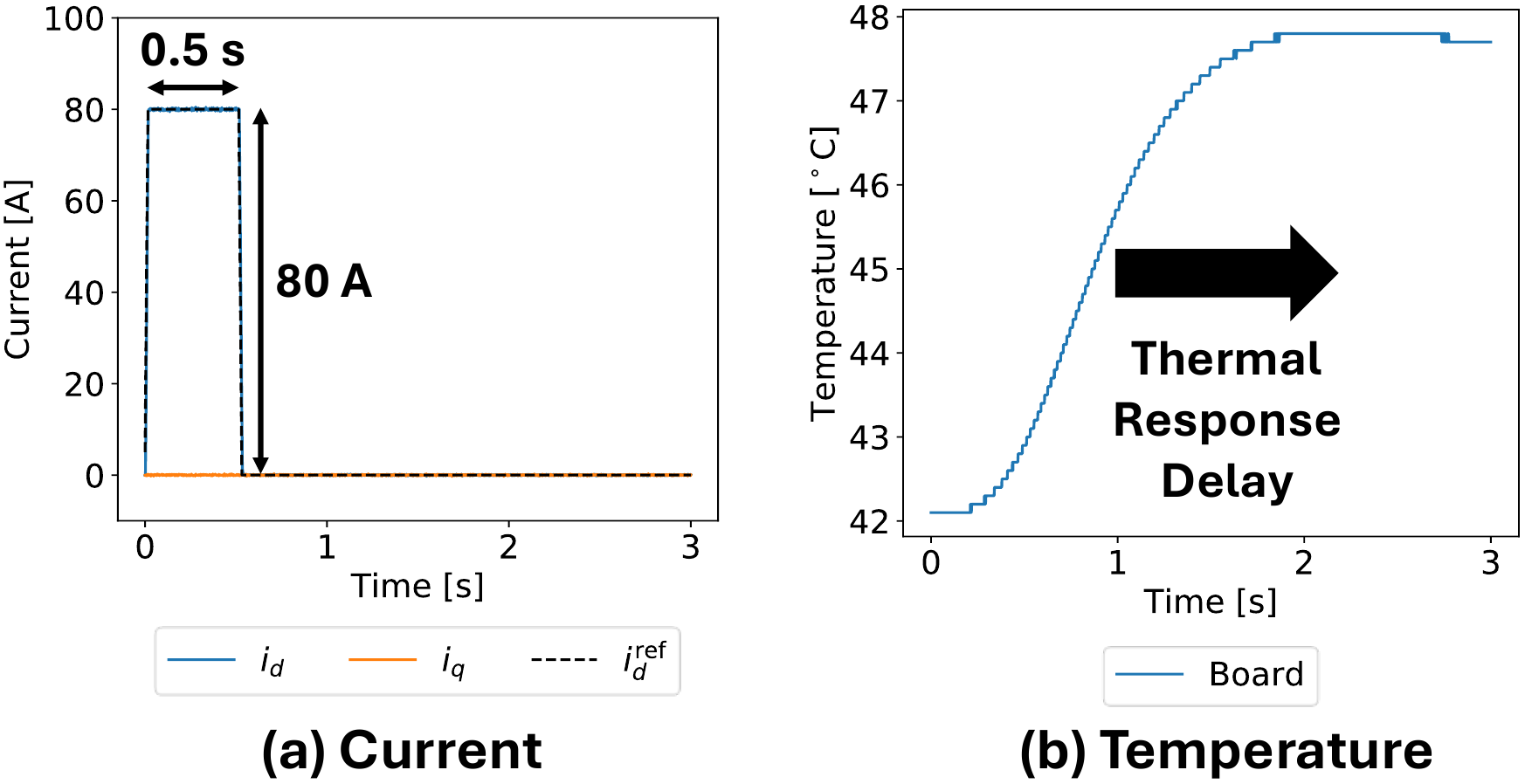
Current and board temperature when 80 A is commanded
The continuous current was then measured without a heat sink, with the Flat Heat Sink, and with the Finned Heat Sink. Each current was held for 10 min, and the highest current staying below the 80 °C limit was taken as the maximum: 13 A, 28 A, and 30 A respectively. Without a heat sink the board reached 46.8 °C even at 0 A, mainly from switching losses in the parasitic and snubber capacitances, which are non-negligible at 96 V.
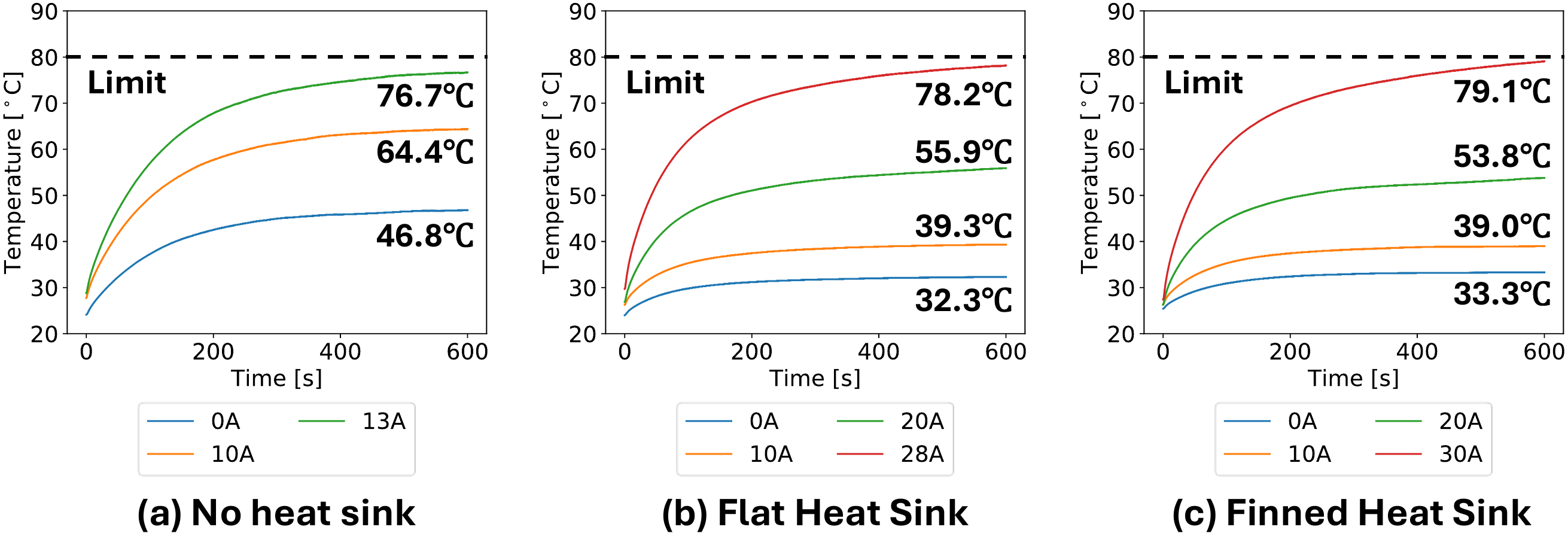
Temperature rise over time at different continuous current levels
High-Speed Load Motion Experiment
As an application assuming a jumping robot, an 8.1 kg load was lifted at high speed. The wire module was mounted on a universal wire testing machine, and the wire was redirected through a passive pulley unit to the load, with TPU cushions above and below for safety. 50 A was commanded until 0.5 m of wire was wound, at supply voltages of 50 V and 100 V. Regenerative operation during the fall required a LiPo 24S (100 V) battery instead of a power supply.
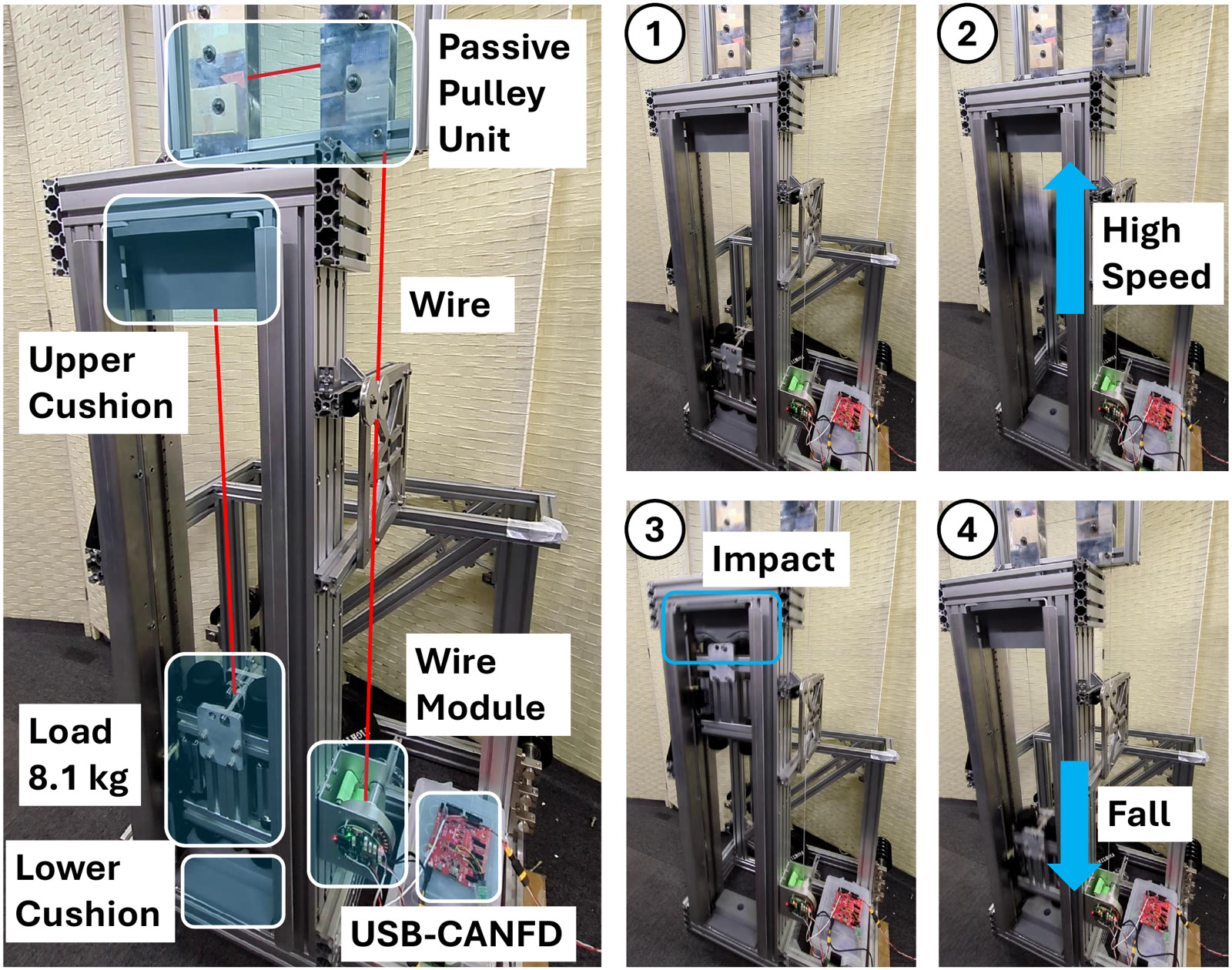
Overview of the high-speed load lifting experiment. The sequential snapshots show the lifting motion at 100 V.
At 50 V the current failed to follow the command in the latter half of acceleration due to speed saturation, while at 100 V it followed until just before the end. The maximum speeds were 4.14 m/s and 4.92 m/s, an improvement of about 19%; the short 0.5 m acceleration distance likely limits the gain. The load struck the upper cushion at high speed with a large impact, showing that LunaDrive can produce large instantaneous power.
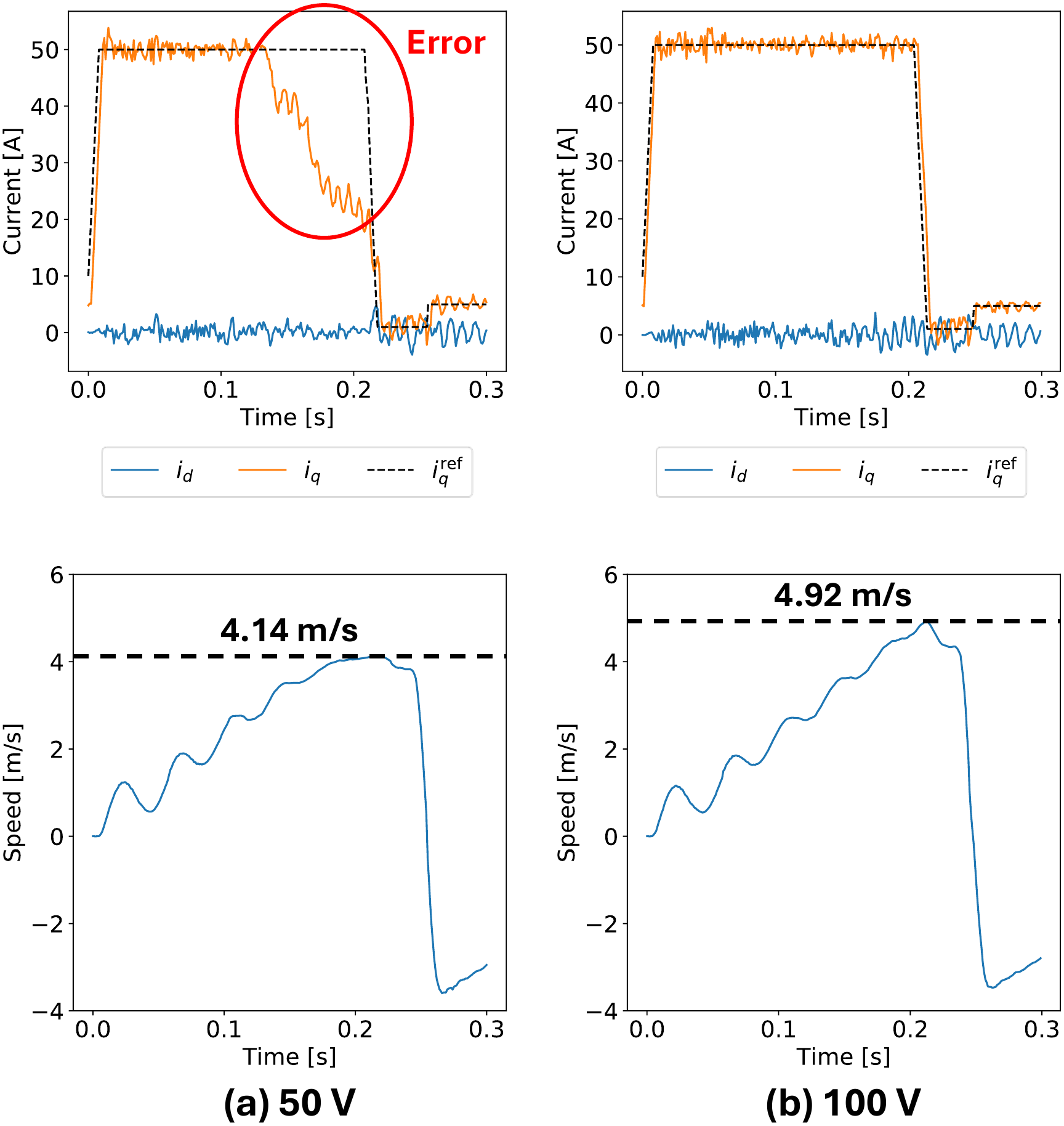
Current and speed responses during high-speed load lifting at 50 V and 100 V
Comparison with an Existing Driver
LunaDrive is a 70 mm disk 8.51 mm thick, rated at 96 V with 150 V components. Gold Solo Twitter (Elmo Motion Control), a compact high-power commercial driver, measures 47.2 × 30 × 19.35 mm. Thickness matters most for flat motor applications, and on that basis LunaDrive leads in both continuous and peak current within the same voltage range.
| Cooling condition | LunaDrive (continuous current / thickness) | Gold Solo Twitter (continuous current / thickness) |
|---|---|---|
| No heat sink | 13 A / 8.51 mm | 3 A / 19.35 mm |
| Flat heat sink | 28 A / 15 mm | 7 A / 23.35 mm |
| Finned heat sink | 30 A / 17.8 mm | 12 A / 28.85 mm |
| Peak current | 80 A | 45 A (R45/150) |
Comparison of continuous and peak current capability. Gold Solo Twitter values are at 85 V operation, taken from its thermal management documentation; the R45/150 model can operate with LiPo 24S at 100 V.
LunaDrive's heat sink is fixed to the frame, which also dissipates heat, so thermal conditions are not directly comparable. Still, LunaDrive without a heat sink exceeds Gold Solo Twitter with one, and also wins on continuous current per volume in the heat-sink-less configuration. Gold Solo Twitter has no encoder, so practical use may add circuitry and thickness. Adopting GaN FETs thus enables both high-voltage and large-current operation.
Conclusion
LunaDrive is a compact GaN FET motor driver that drives high-power flat BLDC motors beyond their nominal voltage rating for high-speed operation, with delay compensation on both the encoder and microcontroller sides. In a 70 mm diameter, 8.51 mm thick package, large-current operation is achieved through a 2 oz 8-layer PCB and capacitor design based on effective capacitance per unit area. It reaches 8890 rpm (3110 Hz electrical frequency), whereas divergent oscillation occurs at about 5760 rpm without delay compensation. Future work includes integration into an actual robot system.
BibTeX
@inproceedings{yuzaki2026lunadrive,
  title={{LunaDrive: A Delay-Compensated High-Voltage GaN FET-Based Motor Driver for Dynamic Robots with Flat BLDC Motors}},
  author={Sota Yuzaki and Temma Suzuki and Hiromi Tada and Masanori Konishi and Kento Kawaharazuka and Kei Okada},
  booktitle={2026 IEEE/RSJ International Conference on Intelligent Robots and Systems (IROS)},
  year={2026},
}
Contact
If you have any questions, please feel free to contact Sota Yuzaki (yuzaki@jsk.imi.i.u-tokyo.ac.jp).